

The impact of the rising cost of fuel
Date
15 March 2022
Share

The graph below shows the close to $1 per litre increase in the cost of diesel over the last 12 months.

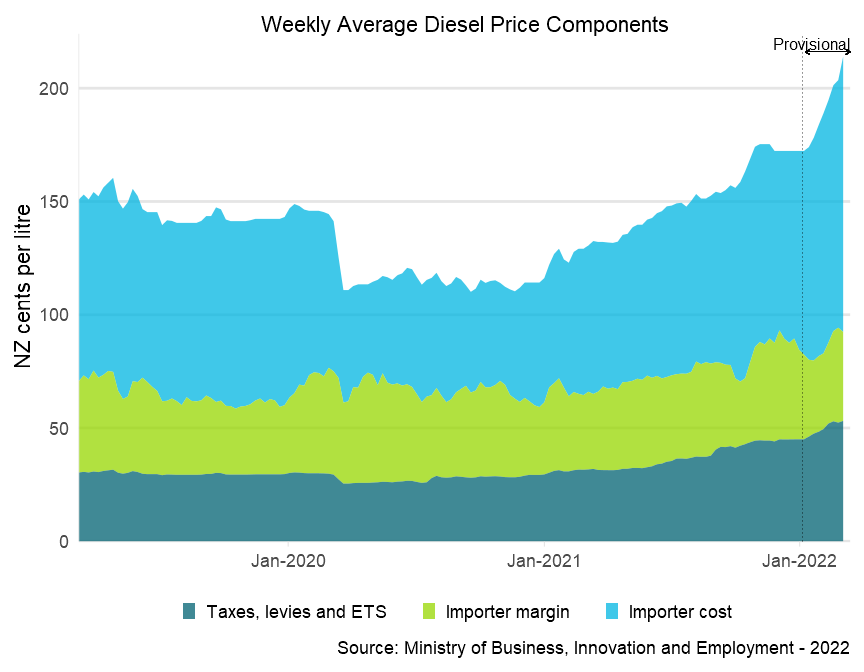
https://www.mbie.govt.nz/building-and-energy/energy-and-natural-resources/energy-statistics-and-modelling/energy-statistics/weekly-fuel-price-monitoring/
Globally, there are two main factors.
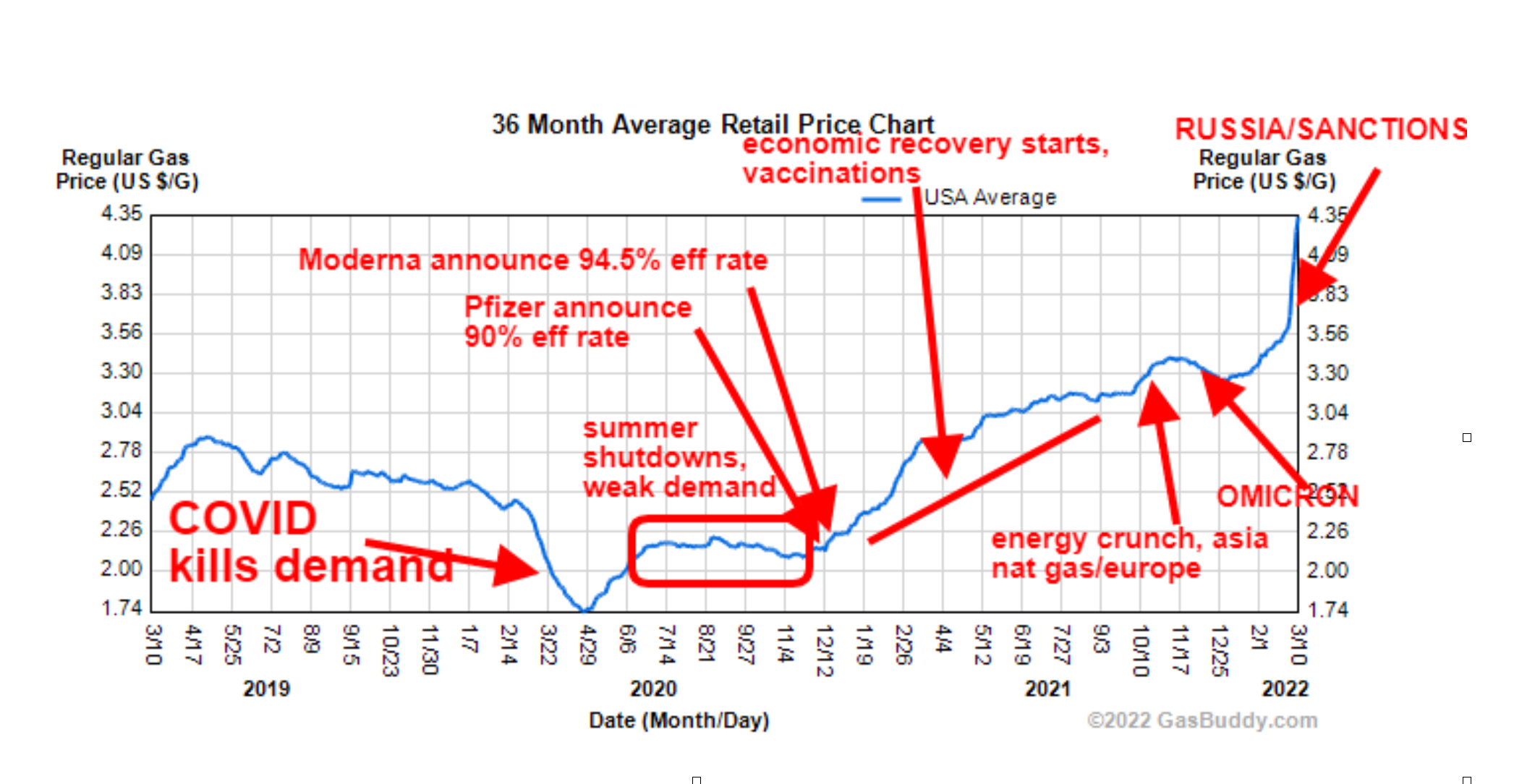
Firstly, global demand for fuel reduced hugely in early 2020 as Covid killed off global demand. Put simply, people stopped travelling by road and air in major economies around the world. Apparently, the average US driver cut their mileage in half. As much of the world resumes more normal activities after their Covid waves have passed, global demand is rising again. As demand fell in early 2020, major producers cut their production. OPEC cut supply sharply, and domestic production in markets like the USA became uneconomic. As global demand has recovered, supply is lagging as it takes longer to turn the tap back on than turn it off.
Secondly, the Russian invasion of Ukraine has created a rapid spike in prices. Global oil prices have increased dramatically over the last month with the uncertainty that any conflict of this nature has brought to global markets. Russia is a significant oil producer, and so sanctions do impact global oil supply.
Here is an interesting chart that shows the impact of Covid and the Russian sanctions on the price of domestic US Gasoline. The US average price per US Gallon is now a record high of about USD$4.35 (gasoline), which is causing pain for US consumers, but given this equates to about NZD$1.69 a litre they still have it bloody cheap by our standards!

The impact on New Zealand prices is also driven by our relative NZD to USD exchange rate, although the NZD has strengthened by about $0.03c since late January. We are still about $0.04c lower than early March 2021.
Unfortunately, there is not a lot you can do as a business user of fuel. You are not exactly going to be pedalling those logs to port are you! We have seen Fuel Adjustment Factors (“FAFs”) become very common in most transport industry contracts, and they are used by many other larger users of diesel. However, with many of these FAFs based on quarterly adjustments the speed of the recent increase is causing pain. In an environment of general costs increases and project delays, but where there is generally strong demand for services (in most areas there is plenty of work around so your clients need you), it is important that operators have honest discussions with their clients about fair cost recovery. There is no point in burning diesel to make a financial loss, so we do strongly encourage our clients to have honest discussions with their clients to ensure the numbers still work.
Similar Posts
25 August 2026
Funding a Business Purchase or Shareholder Buyout
Buying a business, buying into an existing business or funding the exit of a shareholder can be a major step — and finding the right funding structure can be more complex than a standard finance application. At Finance New Zealand, we look at the whole transaction and the wider business, rather than simply looking for one loan to cover the purchase price.


12 August 2026
What IPP3A Means for Finance New Zealand Clients
From 1 May 2026, a new privacy requirement known as Information Privacy Principle 3A (IPP3A) came into effect under New Zealand’s Privacy Act. The change is designed to give you greater visibility over where your personal information comes from and how it is being used. For Finance New Zealand clients, the way we help you arrange finance isn’t fundamentally changing. What you may notice is some additional privacy information or notifications when you apply for new lending or make changes to your existing finance.



Page Links
Contact us
Finance New Zealand Limited L11 BDO Tower, 19-21 Como Street, Takapuna, Auckland 0622 PO Box 65164, Mairangi Bay 0754 T: (09) 222 0320E: info@financenz.co.nzStay connected



Member of


Proud Sponsors of Auckland Rescue Helicopter Trust
Copyright Finance New Zealand Ltd 2026